
If you're searching for how to get over someone you love, chances are you've already tried. You've deleted and reinstalled their chat thread more times than you'd like to admit. You tell yourself not to check their social media, yet you somehow end up on their profile anyway. You replay your last conversation, wondering whether you missed a sign, said the wrong thing, or could have done something differently.
No matter how much you understand that the relationship is over, your heart keeps acting as though it isn't. That's what makes heartbreak so confusing. Your mind knows the truth, but your emotions haven't caught up. Friends encourage you to "move on," while social media insists that healing is simply a matter of choosing yourself.
Letting go of someone you deeply loved isn't a switch you flip. It’s a process of untangling your ex from your daily life, your future plans, and even your sense of who you are.
Psychological research shows that heartbreak affects the brain, emotions, and identity in ways that make separation genuinely difficult.
Why Getting Over Someone You Love Feels So Hard
One of the most frustrating parts of heartbreak is feeling like you're making no progress. You can go an entire day feeling okay, only to hear a familiar song or walk past a place you used to visit together, and suddenly it feels like the breakup happened yesterday.
That doesn't mean you've failed to heal. It reflects how deeply romantic relationships become embedded in the brain. Brain imaging research on people who had recently experienced an unwanted breakup found that seeing a photo of their former partner activated brain regions involved in:
Wanting someone who's no longer there, which may explain why you keep obsessing over your ex.
Longing and craving, making it common to miss them deeply or want to reconnect, even when you know the relationship is over.
Working through difficult emotions, such as love, sadness, rejection, hope, and disappointment—all at the same time.
Processing a significant loss, because the relationship once played an important role in your life.
7 Steps on How to Get Over Someone You Love
There's no single moment when you "get over" someone you love. More often, healing happens through the choices you make each day. While you can't control how quickly your feelings change, you can control the habits that either keep you emotionally attached or help you gradually move forward.
1. Let Yourself Grieve Instead of Rushing to Feel Better
It's easy to feel like you're falling behind if you're still crying weeks or months after the breakup. But grief doesn't follow a schedule.
Rather than judging yourself for missing them, acknowledge what you've lost. You're not only grieving the relationship but also the routines, companionship, and future you imagined together. Accepting those emotions is healthier than trying to suppress them or pretend you're fine.
2. Limit the Reminders That Keep Reopening the Wound
You don't need to erase every memory of your ex, but you also don't need to revisit them every day. Start by reducing the reminders you can control:
Archive old messages instead of rereading them.
Mute their social media accounts.
Put away photos and keepsakes you see every day.
Ask friends not to update you about their life.
Follow the no-contact rule; think of it as giving yourself space to adjust to the breakup, not as a strategy to get your ex back.
3. Don't Act on Every Urge to Reach Out
Missing someone can create a strong urge to text your ex, call, or check in, especially when you're feeling lonely or nostalgic.
Before acting, ask yourself:
What am I hoping will happen?
Will this conversation change the outcome of the breakup?
How will I feel if I don't get the response I'm hoping for?
Give yourself at least 24 hours before deciding. Many urges become less intense once the initial wave of emotion passes.
4. Replace Shared Routines With New Ones
Some of the hardest moments after a breakup aren't birthdays or anniversaries. They're the ordinary parts of the day that used to include your partner.
Think about the routines you've lost and replace them with new ones. Meet a friend on Friday nights if that's when you used to go on dates. Try a different café if your usual spot brings back painful memories. Small changes help your daily life feel less centered around the relationship.
5. Stop Looking for the "Right" Timeline
Many people search for how long does it take to get over a breakup, hoping for a clear answer. The reality is that healing depends on many factors, including the length of the relationship, how it ended, your attachment to the person, and the support you have afterward.
Instead of measuring your progress by time, look for signs that your life is expanding again. You're making plans without thinking about them first. You're enjoying conversations without comparing everyone to your ex. You're having more good days than difficult ones.
6. Separate the Breakup From Your Self-Worth
Heartbreak has a way of turning one painful event into a painful belief. The relationship ended. That doesn't mean you weren't enough.
Relationships end for many reasons, including different goals, incompatible needs, poor communication, or timing. If you're feeling worthless after breakup, remind yourself that another person's decision doesn't define your value. The end of a relationship says something about the relationship, not your worth as a person.
7. Focus on the Life You're Building, Not the One You Lost
Moving on doesn't mean forgetting someone or pretending they never mattered. It means gradually investing more energy in the life that's still in front of you than the relationship that's behind you.
There will come a time when your first instinct is no longer to tell them about your day, when a familiar song doesn't ruin your afternoon, or when you realize you've gone hours without thinking about the breakup. Those moments won't happen because you forced yourself to stop loving them. They'll happen because, little by little, your life became bigger than your loss.
How a Breakup Recovery App Can Support Your Healing
Reading advice can help you understand your emotions. But when you're living through a breakup, you'll probably have new questions every week:
Why do I still miss them after everything that happened?
Was the relationship actually unhealthy, or am I rewriting the past?
Why do I keep ending up in the same kind of relationship?
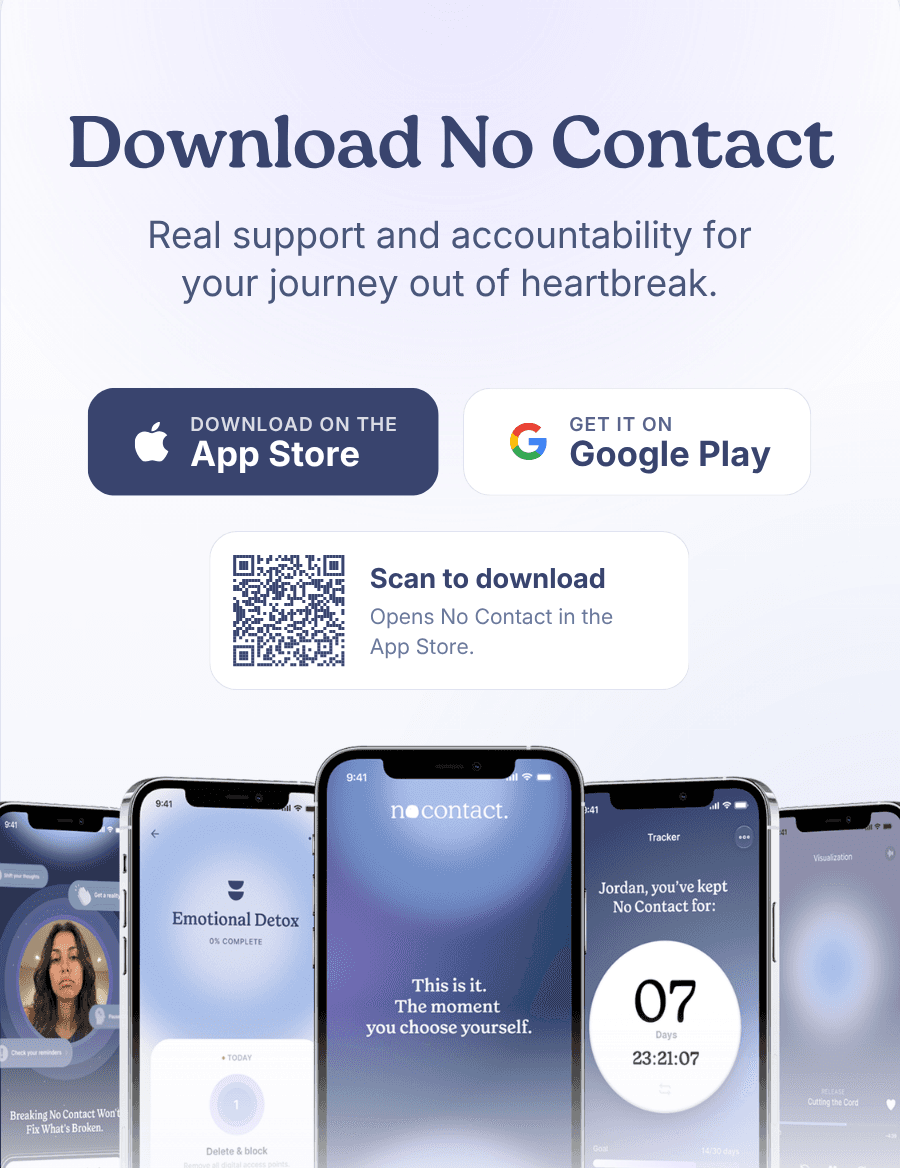
A breakup recovery app is designed to help you through those moments. No Contact app combines practical tools, guided reflection, and an emotional support community to help you understand what you're feeling, make sense of the relationship, and keep moving forward without losing sight of why you chose to heal.
Interrupt the Spiral Before It Takes Over
The hardest part of a breakup is often the few minutes before you act on an impulse. No Contact's Panic Room is designed for those moments. It gives you practical ways to slow down and regain perspective, whether that means grounding yourself with breathing exercises, journaling what you're feeling, revisiting reminders of why the relationship ended, or writing the message you're tempted to send without actually sending it. Sometimes, creating a pause is all you need for the urge to pass.
Gain Clarity About What Really Happened
Heartbreak can distort your perspective. One day you blame yourself for everything. The next, you're wondering whether the relationship was as healthy as you remember.
No Contact helps you make sense of those questions through tools like Message Analyzer, Evidence Vault, and Healing Insights. Together, they help you recognize communication patterns, revisit the full reality of the relationship, and better understand the emotional ups and downs that are common during recovery.
Focus on Who You're Becoming Next
Healing isn't only about leaving one relationship behind. It's also about building healthier ones in the future. Through guided recovery programs, relationship education, visualizations, and an AI coach you can turn to whenever you need support, No Contact encourages deeper self-reflection long after the initial heartbreak begins to fade. The goal is to help you understand yourself better so you're less likely to repeat the same patterns.
Some of the Best Encouragement Comes From People Who've Been There
There's something reassuring about hearing, "I felt that way too." It reminds you that what you're experiencing is normal and that it won't last forever.
No Contact's Community brings together people at different stages of recovery who understand the setbacks, small victories, and everyday challenges of moving on. Sometimes, knowing someone else has made it through is exactly the perspective you need to keep going.
Loving Someone Doesn't Mean You Can't Let Go
Getting over someone you love isn't about pretending they never mattered. It's about slowly making room for a life that no longer depends on them.
There will be days when you miss your ex. There will be moments when old memories resurface. That doesn't mean you're moving backwards. It simply means you loved someone deeply.
No Contact gives you a private space to pause, reflect, and let the emotional wave pass before it pulls you into actions you may later regret.
Download No Contact today and turn small steps into lasting progress. Remember, every day you choose your healing is a day you're moving forward.